Karimen exam no 6
30:00
Question 1. This sign is a warning sign indicating crosswinds.

Question 2. When turning right from a one-way road, you must first move to the center of the road and proceed slowly.
Question 3. This sign indicates a rotary (roundabout) ahead.

Question 4. When a traffic officer raises their arm horizontally, traffic parallel to their body is treated as a red signal.
Question 5. Large and ordinary motorcycles can tow a maximum of two vehicles at the same time.
Question 6. This sign is a warning sign indicating a steep downhill slope.

Question 7. When traveling on a priority road, it is possible to overtake automobiles or motorized bicycles at an intersection or within 30 meters before it.
Question 8. Overtaking is prohibited on the left side of a safety zone and within 10 meters before or after it.
Question 9. High-speed driving can cause the tire surface to peel off and burst, a phenomenon called the standing wave.
Question 10. An ordinary motorcycle with a displacement of 125cc can travel on highways.
Question 11. This sign indicates that the road ahead is a priority road, and vehicles and trams must proceed slowly.

Question 12. At a railway crossing with a traffic signal, even if the signal is green, you must stop temporarily to check for safety.
Question 13. When getting in or out of a vehicle, check the surroundings carefully, and in heavy traffic, exit from the left door.
Question 14. With a large motorcycle license, you can drive an ordinary motorcycle.
Question 15. Automatic motorcycles have strong engine braking, so it’s better not to overuse the front and rear brakes.
Question 16. This marking indicates the method for making a left turn at an intersection.
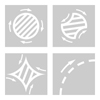
Question 17. The distance from braking to stopping is always constant regardless of road conditions if the speed is the same.
Question 18. When driving while fatigued, it takes longer to make judgments, resulting in a longer reaction distance.
Question 19. An inner wheel difference occurs when a vehicle turns left but not when it turns right.
Question 20. The center line is always located in the middle of the road.
Question 21. This sign indicates a railway crossing ahead.

Question 22. When the battery fluid level is low, it should be topped up with distilled water.
Question 23. Lights must be turned on when visibility is less than 50 meters, such as inside a tunnel.
Question 24. On downhill slopes, speed increases and stopping distance becomes longer, so it’s better to keep a narrower gap with the vehicle ahead.
Question 25. When there is an obstacle ahead, oncoming traffic has priority, so you must stop or slow down to yield.
Question 26. This marking indicates a prohibition on U-turns.

Question 27. The maximum load capacity of a motorcycle is 50 kg.
Question 28. Parking is prohibited within 5 meters of the entrance or exit of a parking lot or garage for vehicles.
Question 29. At a railway crossing without a signal, you must stop temporarily and check safety with both eyes and ears.
Question 30. Drivers who have held a license for less than one year must display a beginner mark on either the front or rear of the vehicle.
Question 31. This sign indicates the type of vehicle, in this case, large passenger vehicles or specific medium passenger vehicles.

Question 32. The braking distance is proportional to the reaction distance.
Question 33. When a person with a white or yellow cane is walking, vehicles must stop or slow down to allow safe passage.
Question 34. When riding a motorized bicycle on a road with three or more lanes, it is best to use the middle lane.
Question 35. When the signal at an intersection ahead turns yellow, you may enter the intersection with caution even if you can stop safely.
Question 36. This supplementary sign indicates the start of a traffic restriction zone or section specified by the main sign.

Question 37. When driving through a curve or corner, if the speed doubles, the centrifugal force also doubles.
Question 38. When a police officer raises their arm vertically, traffic parallel to their body has the same meaning as a yellow signal.
Question 39. When the signal ahead is flashing red, vehicles can proceed with caution to other traffic.
Question 40. Self-centered driving not only inconveniences other vehicles but can also cause accidents, so it must be avoided.
Question 41. This sign indicates that vehicles cannot pass through the road ahead.

Question 42. When overtaking, you must first signal with the indicator, then check if the location is safe and confirm the surroundings.
Question 43. Unnecessary lane changes cause traffic disruptions and accidents, so they must be avoided.
Question 44. When parking on flat ground, it is not necessary to engage the handbrake.
Question 45. When a motorcycle negotiates a curve, it is best to gradually reduce speed while turning.
Question 46. This sign indicates the presence of a pedestrian crossing and a bicycle crossing lane.

Question 47. It is better to drive at night with the interior light on.
Question 48. This sign indicates that vehicles with a gross weight exceeding 5.5 tons cannot pass.
