Karimen exam no 15
30:00
Question 1. There is no time limit for stopping to pick up or drop off passengers.
Question 2. This sign indicates that parking is prohibited.

Question 3. The passenger capacity of a motorized bicycle is one person, but if there is a seat other than the driver's seat, the capacity is two people.
Question 4. Light vehicles are included in the category of automobiles.
Question 5. It is prohibited to stop or park within 5 meters before or after a pedestrian crossing or bicycle crossing lane.
Question 6. When driving an automatic vehicle down a long slope, it is best to use only the foot brake.
Question 7. This sign indicates a merging intersection ahead.

Question 8. When entering or exiting a tunnel, brightness changes suddenly, which may temporarily reduce visibility, so it is advisable to slow down.
Question 9. When riding a two-wheeled vehicle, the helmet should be a standard size, strong, and heavy.
Question 10. For four-wheeled vehicles, seat adjustment should allow the knees to be fully extended when pressing the brake or clutch pedal.
Question 11. Unlike first-class or second-class licenses, a provisional license has no validity period.
Question 12. This sign indicates that the road ahead is under construction.

Question 13. A large motorcycle is a two-wheeled vehicle with an engine displacement exceeding 250cc.
Question 14. The license plate for commercial four-wheeled vehicles with a displacement of 660cc or less is black with yellow lettering.
Question 15. In muddy or wet areas, care must be taken to avoid splashing water or mud on pedestrians by slowing down.
Question 16. If no passengers are boarding or alighting from a stopped tram and a distance of at least 1.5 meters can be maintained, you may pass slowly without stopping.
Question 17. This sign indicates a bicycle crossing lane.

Question 18. On steep downhill slopes, vehicles must proceed slowly.
Question 19. Motorized bicycles, light vehicles, and small special vehicles must travel in the leftmost lane unless turning right or due to road construction.
Question 20. When an emergency vehicle approaches, there is no need to pull over to the left if traffic is light and the road is wide enough.
Question 21. The legal speed limit for a motorcycle or motorized bicycle with a displacement of 125cc or less when towing another vehicle is 25 km/h.
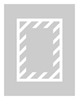
Question 22. This marking indicates a no-stopping zone, and vehicles or trams must not enter if they are likely to stop within it.
Question 23. Overtaking is prohibited on steep downhill slopes, but it is allowed near the top of uphill slopes.
Question 24. When traffic is heavy and there is a risk of being unable to exit a priority bus lane, vehicles must not use that lane.
Question 25. When driving on snowy roads, it is best to avoid the tracks made by other vehicles as much as possible.
Question 26. On roads without sidewalks or shoulders, automobiles (except motorcycles) cannot travel on the shoulder.
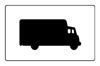
Question 27. This sign indicates the type of vehicle, in this case, large trucks, specific medium trucks, or large special vehicles.
Question 28. Vehicles may travel on tram tracks if it is clear that no trams are passing.
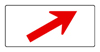
Question 29. This is a directional supplementary sign indicating the direction of the route, facility, or place specified by the main sign.
Question 30. The area between the outer edge of the roadway and the sidewalk is considered part of the roadway.
Question 31. When turning right from a one-way road, you must first move to the left side of the road and signal.
Question 32. This sign indicates that animals may suddenly appear.

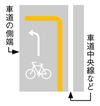
Question 33. This marking indicates a bicycle crossing lane.

Question 34. A flashing yellow signal allows vehicles to proceed slowly without stopping, while paying attention to other traffic.
Question 35. Overtaking is prohibited at railway crossings and within 30 meters before them.
Question 36. The legal speed limit for ordinary trucks is 50 km/h.
Question 37. This sign indicates that vehicles must not proceed in any direction other than the one indicated by the arrow.

Question 38. When stopping at a red light, vehicles are allowed to enter a no-stopping zone.
Question 39. If mud or water splashes while passing through a muddy or wet area, the driver is not responsible if they were driving slowly.
Question 40. In case of a traffic violation or accident, the driver may face criminal, administrative, or civil liability.
Question 41. Gross vehicle weight is the total weight of the vehicle, maximum load, and passenger capacity.
Question 42. This sign is a guide sign indicating an emergency telephone on the highway.

Question 43. If it is clear that no bicycles are crossing a bicycle crossing lane, overtaking is allowed in that lane.
Question 44. This sign indicates the maximum width, and vehicles exceeding the indicated width cannot pass.

Question 45. A steep slope refers to a gradient of approximately 10% (6 degrees or more).
Question 46. Minicars with a displacement of 50cc or less are included in the category of motorized bicycles.
Question 47. This marking indicates a prohibition on bicycles entering an intersection, and regular bicycles must not cross the marking into the intersection.