Karimen exam no 14
30:00
Question 1. This sign indicates a T-shaped road intersection ahead.

Question 2. When making a right turn and an oncoming straight-moving vehicle yields, you must turn quickly.
Question 3. When a vehicle breaks down in a railway crossing, you should use the crossing obstruction alert device to notify the train driver and avoid using flares to prevent fire hazards.
Question 4. Starting from the roadside is not considered a lane change.
Question 5. Even in a no-lane-change zone, you may change lanes if roadwork prevents passage.
Question 6. This sign indicates a T-shaped road intersection ahead.

Question 7. Signs are divided into main signs and auxiliary signs, with main signs consisting of four types: regulatory, instruction, warning, and guide signs.
Question 8. Light vehicles cannot travel on a roadside strip marked by two solid white lines.
Question 9. When driving on a road without a sidewalk or roadside strip, vehicles must not veer onto the shoulder.
Question 10. When crossing a sidewalk to enter a store, you may drive slowly if it is clear there are no pedestrians.
Question 11. This sign indicates a maximum speed of 50 km/h, allowing regular cars, regular motorcycles, and motorized bicycles to reach up to 50 km/h.

Question 12. The stopping distance for a regular car traveling at 50 km/h is approximately 32 meters.
Question 13. Driver’s licenses are divided into two categories: first-class and second-class licenses.
Question 14. You must not carry passengers in areas other than seats, but in a cargo vehicle, a minimum number of people can ride in the cargo area to monitor the load.
Question 15. Parking or stopping is prohibited within 10 meters of an intersection and its edges.
Question 16. At an intersection with this sign and no stop line, you must stop immediately before the intersection.

Question 17. At an unregulated intersection, if a tram approaches from the right, you may proceed as the left side has priority.
Question 18. When passing a tram stopped at a stop, you must stop temporarily even if there is a safety zone.
Question 19. When passing a stopped vehicle, you must be cautious of doors suddenly opening or people emerging from behind.
Question 20. If a vehicle must be parked on a highway due to an accident, hazard lights or similar must be activated.
Question 21. This sign indicates a safety zone.

Question 22. Overtaking is allowed in a tunnel if there are marked lanes.
Question 23. If the center line is a white broken line, you may overtake by crossing into the right side of the road.
Question 24. You cannot park where there is less than 3.5 meters of space on the right side of the road, but stopping for loading/unloading with the driver ready to move is an exception.
Question 25. If a property damage accident is settled on the spot, it is not necessary to report to the police.
Question 26. This sign indicates the lane assignment for large trucks, specific medium trucks, and large special vehicles on expressways.

Question 27. The legal maximum speed is the highest speed set by law for roads without designated speed signs or markings.
Question 28. Overtaking is moving ahead of a vehicle in front by changing the path.
Question 29. If you have a large special vehicle license, you can drive a regular motorcycle.
Question 30. When inspecting a motorcycle chain, you must press the middle to check for excessive looseness or tightness and ensure proper lubrication.
Question 31. This sign indicates a facility or factory handling hazardous materials ahead.

Question 32. The 'R' on an automatic vehicle’s gear lever stands for reverse and is used for backing up.
Question 33. When passing the crest of a blind uphill slope, you must sound the horn even without a 'sound horn' sign.
Question 34. If it is unclear whether pedestrians or bicycles are present at a pedestrian or bicycle crossing, you must stop temporarily.
Question 35. Tire chains should be fitted to the drive wheels.
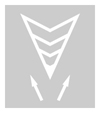
Question 36. This marking indicates approaching a safety zone or roadside obstacle.
Question 37. When an emergency vehicle approaches on a one-way road, you must always pull over to the left side to yield.
Question 38. Driving on a wet road increases the free-running distance.
Question 39. Parking is prohibited within 10 meters before and after the left side of a safety zone, but stopping is allowed.
Question 40. Parking or stopping is prohibited within 5 meters of a road curve.
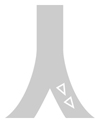
Question 41. This marking indicates a pedestrian or bicycle crossing.
Question 42. The maximum height of cargo on a regular motorcycle is 2.0 meters from the loading device.
Question 43. If a license is revoked or expires, it does not need to be returned.
Question 44. When performing a two-stage right turn with a motorized bicycle, you must first move as close as possible to the left edge of the road.
Question 45. A bus-only lane can be used by regular cars outside of designated hours.
Question 46. This sign indicates that vehicles can park.
