Honmen exam no 15
Question 1. At actual traffic locations, it is important for pedestrians and vehicle drivers to assess and act with empathy for each other, not just thinking about themselves.
Question 2. Drivers of two-wheeled and four-wheeled vehicles must understand each other's vehicle characteristics and act with mutual consideration and empathy.
Question 3. Many traffic accidents occur at dusk, so you should turn on the front headlights after your eyes adjust to the darkness.
Question 4. Upon noticing an emergency vehicle approaching at an intersection, you avoided the intersection, pulled over to the left side of the road, and stopped.
Question 5. You should wear a helmet designed for two-wheeled vehicles with a PSC or JIS safety certification mark.
Question 6. When passengers are boarding or alighting from a tram, you must stop until no one is boarding, alighting, or crossing the road, regardless of whether there is a safety zone.
Question 7. When parking on the roadside or a wide shoulder due to a breakdown on a highway, you do not need to place a reflective warning triangle.
Question 8. This sign indicates that parking is not allowed unless there is a clearance of 6 meters or more on the right side of the vehicle when parked.

Question 9. Overtaking is prohibited at curves and corners, but you may overtake if the vehicle ahead is traveling slower than the speed limit.
Question 10. At some intersections, when the signal is green, cars can go straight, turn right, or left, but at certain intersections, motorized bicycles can only go straight or turn left, not right.
Question 11. When riding a motorized bicycle, wearing a construction safety helmet will be considered a riding helmet.
Question 12. When riding in the rain, if the windshield is covered with an oil film, visibility will be reduced, so you should use a cleaning solution to remove dirt.
Question 13. When intending to cross a railway crossing, you should first stop just before the crossing (or before the stop line if present) and confirm safety to the left and right with your own eyes.
Question 14. When towing a broken-down vehicle with a rope, it is dangerous if the distance between the towing vehicle and the towed vehicle is not at least 5 meters.
Question 15. When getting in or out of a vehicle, the driver must check the surroundings, especially for vehicles approaching from behind.
Question 16. When the gear of an automatic transmission vehicle is not in P or N, the vehicle may move due to creeping even without pressing the accelerator, so you must firmly press the brake pedal.
Question 17. When towing a vehicle with a total weight of 750 kg or less using a regular car, you need a towing license in addition to the regular driver's license.
Question 18. On roads with this sign, large or regular two-wheeled motorcycles are prohibited, but motorized bicycles are allowed to travel.

Question 19. It is extremely dangerous to be dazzled by the headlights of an oncoming vehicle, causing temporary loss of vision, so try not to look directly at the headlights of oncoming vehicles.
Question 20. On pedestrian-only roads, only specially permitted vehicles, such as those with garages on the road, are allowed to travel. These vehicles must pay special attention to pedestrians and travel slowly.
Question 21. When parking or stopping on a road without a sidewalk or shoulder, you must stop along the left edge of the road.
Question 22. Drivers must anticipate the actions of pedestrians and cyclists, paying close attention to their movements.
Question 23. On roads with a slow lane, vehicles such as heavy cargo trucks will use the slow lane and yield to faster vehicles.
Question 24. Even if the vehicle ahead intends to overtake another vehicle, you may also overtake if there is enough space.
Question 25. When riding a two-wheeled vehicle with a passenger through a curve, you should lean the vehicle more.
Question 26. When riding a two-wheeled vehicle in hot weather, exposing more of the body reduces fatigue and aids safe driving.
Question 27. This sign indicates a merging traffic point ahead.

Question 28. If a tire blows out while driving, you should firmly grip the steering wheel, correct the vehicle's direction, and brake intermittently to stop.
Question 29. When a four-wheeled vehicle turns left, since the front and rear wheels follow the same path, there is no need to worry about accidents due to the gap between the front and rear wheels on the inside of the turn.
Question 30. It is prohibited to require a driver to operate an overloaded vehicle (i.e., loading cargo beyond the weight limit) or to sell or transfer cargo that may cause overloading.
Question 31. Daily inspections are performed under the responsibility of the vehicle user and the person about to operate the vehicle before driving it daily.
Question 32. When parking an automatic transmission vehicle, you should shift to the P position whether on an uphill or downhill slope.
Question 33. This sign indicates a no-parking zone.
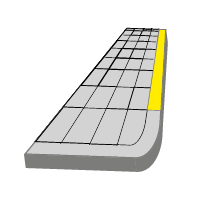
Question 34. You are allowed to drive a small bus with a designated capacity of 11 passengers with a regular driver's license.
Question 35. You should check tire air pressure based on wear indicators, etc.
Question 36. When riding a two-wheeled vehicle, you tend to focus your vision on objects nearby, receiving less information about distant objects and left-right directions compared to four-wheeled vehicle drivers.
Question 37. The 'no traffic' sign prohibits pedestrian traffic to prevent danger, so vehicles can still travel.
Question 38. Within 10 meters of a bus stop sign during bus operating hours, parking is prohibited but stopping is allowed.
Question 39. When braking, pressing the brake pedal intermittently causes the brake lights to flash, serving as a signal to the vehicle behind and helping prevent rear-end collisions.
Question 40. The maximum speed for large passenger vehicles and large cargo vehicles on highways designated for high-speed vehicles is the same.
Question 41. If you feel even slightly uneasy about judging or changing lanes due to traffic or road conditions, you should not change lanes.
Question 42. The correct driving posture requires the seat position to allow the knees to be fully extended when pressing the clutch pedal.
Question 43. Overusing the foot brake on long downhill slopes may cause the brakes to fail, so you should use both the foot brake and engine brake.
Question 44. This sign indicates a slippery road ahead, so caution is needed.

Question 45. When braking on snowy or icy roads, there is a risk of skidding, so you should skillfully use both the engine brake and foot brake.
Question 46. When traveling in a designated lane near an intersection, you do not need to yield to an approaching emergency vehicle.
Question 47. When loading cargo onto the cargo bed of a large or regular two-wheeled motorcycle, cargo can protrude up to 50 cm from the rear of the cargo bed.
Question 48. People using wheelchairs, pedestrians guided by dogs, or those using white or yellow canes are physically disabled, so vehicles must stop or slow down to allow them to travel safely.
Question 49. When there is an obstacle on the road ahead, you should accelerate to pass it before an oncoming vehicle.
Question 50. Even with a driver's license, driving during a suspension or temporary suspension penalty is equivalent to driving without a license.
Question 51. The police officer's hand signal shown here has the same meaning as a yellow traffic light for the direction of the arrow.

Question 52. When a two-wheeled vehicle brakes suddenly, the wheels may lock (the wheels stop rotating), causing lateral skidding.
Question 53. On roads with moving lanes, frequently moving to an empty lane while driving stabilizes traffic and prevents danger.
Question 54. Near the crest of a hill, visibility ahead is limited, making it highly dangerous, so parking and stopping are prohibited except in unavoidable cases like avoiding danger.
Question 55. When loading heavy cargo onto a vehicle, braking is more effective due to the cargo's weight, shortening the braking distance.
Question 56. Small cars, regular two-wheeled motorcycles with engine displacement of 125cc or less, and motorized bicycles are not allowed on highways.
Question 57. In areas designated by a 'horn required' sign, such as mountain curves with limited visibility, you must sound the horn to prevent danger.
Question 58. Due to a high fever from a cold, there is a risk of not being able to drive normally, so you refrained from driving and went to the hospital by taxi.
Question 59. On wet asphalt or snowy roads, the road is slippery, and the frictional resistance between the road and tires increases, shortening the braking distance.
Question 60. This sign prohibits pedestrians from crossing.

Question 61. Fog significantly reduces visibility, so you should turn on headlights, fog lights, and tail lights early and sound the horn when necessary.
Question 62. When a vehicle turns left at an intersection, you should turn the steering wheel to the right briefly before turning left to eliminate the gap between the front and rear wheels on the inside of the turn.
Question 63. When loading cargo onto a regular cargo vehicle, the protruding length of the cargo may extend up to one-tenth of the vehicle's length.
Question 64. If intending to pass a vehicle stopped in front of a pedestrian crossing or bicycle crossing area, the vehicle must proceed slowly.
Question 65. Near toll booths on highways, many rear-end collisions occur due to lane changes or inattentive driving, so you must pay attention to surrounding vehicles.
Question 66. When overtaking a motorized bicycle, maintain a sufficient distance to prevent the rider from falling due to wind pressure from your vehicle.
Question 67. According to the police officer's hand signal, when the officer raises both arms horizontally at a location without pedestrian crossings or intersections, vehicles facing the officer must stop 1 meter in front of the officer.
Question 68. There are three types of braking for two-wheeled vehicles: using the hand brake, foot brake, and engine brake.
Question 69. On one-way roads, high-speed vehicles travel as far to the right as possible.
Question 70. Parking is when a vehicle remains stopped continuously or is stopped in a state where the driver cannot immediately operate it after leaving the vehicle.
Question 71. The distance a vehicle travels from when the driver perceives danger to when they press the brake pedal and the brake takes effect is called the braking distance.
Question 72. The owner of a vehicle must register it with the Road Transport Bureau and attach license plates.
Question 73. When driving, the time to signal when changing lanes to the left in the same direction is when you start turning the steering wheel.
Question 74. You should refrain from driving when photochemical smog occurs or is expected due to air pollution.
Question 75. Focusing on the surroundings can be distracting and dangerous, so novice drivers with limited experience should focus on a single point ahead.
Question 76. These traffic signs and instructions, with ア indicating 'left turn permitted' and イ indicating 'one-way traffic.'

Question 77. When driving in a busy urban area at night, you should switch the headlights to low beam.
Question 78. The leftmost lane is designated for fixed-route buses by traffic signs, but you entered that lane and turned left while driving a regular car.
Question 79. Carrying passengers in the cargo bed of a cargo vehicle is prohibited, but when loading cargo, you may carry the minimum necessary people in the cargo bed to watch the cargo while driving.
Question 80. When approaching a pedestrian crossing, if it is clear there are no pedestrians nearby, you may maintain your speed without slowing down.
Question 81. When traveling on highways, tire wear and damage or insufficient tire pressure can cause blowouts, so careful inspection is necessary.
Question 82. Vehicles are not allowed to overtake cars or motorized bicycles at pedestrian crossings, bicycle crossing areas, or within 30 meters before them.
Question 83. Vehicles facing this signal may enter the intersection if they pay attention to other traffic and proceed together.

Question 84. The ability to maneuver a two-wheeled vehicle in a figure-eight pattern while walking it is also a condition for selecting a two-wheeled vehicle.
Question 85. When a driver receives necessary instructions from a police officer regarding traffic methods, the driver must follow those instructions.
Question 86. When pulling the handbrake fully, it should have a large free travel distance.
Question 87. On roads without speed limit signs, to overtake a regular car traveling at 60 km/h, you may temporarily exceed that speed.
Question 88. In a traffic accident, move the vehicle to the roadside or an open area to avoid obstructing other traffic, then stop the engine to prevent secondary accidents.
Question 89. When starting from a reverse direction, if a passenger or someone else confirms safety behind, the driver does not need to check behind.
Question 90. With a large two-wheeled vehicle license and being 20 years or older, you may carry a passenger on highways.
Question 91. You are driving at 90 km/h on a highway. What should you pay attention to while driving?
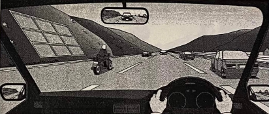
The vehicle ahead on the right may suddenly change lanes to the left due to a narrow gap with the vehicle in front, so I will ease off the accelerator to maintain a safe distance.
Two-wheeled vehicles are agile and may suddenly change lanes to the right to overtake the vehicle ahead, so I will watch their actions to avoid sudden braking.
If I maintain a sufficient gap with the vehicle ahead, another vehicle may enter my lane, so I will narrow the gap with the vehicle ahead while driving.
Question 92. On a rainy day, you are driving at 40 km/h. What should you pay attention to while driving?
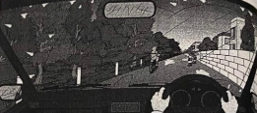
The children on the right may move to the middle of the road to avoid puddles, so I will speed up to pass them first.
I think the bicycle will notice my vehicle approaching through its rearview mirror, so I will maintain a distance from the children and pass right beside the bicycle.
Since there is insufficient distance between the children and the bicycle, I will overtake the bicycle after passing the children.
Question 93. You are driving at 30 km/h. What should you pay attention to while driving?
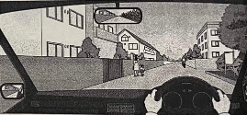
The child will not run into my vehicle's lane because they are holding an adult's hand, so I will maintain my speed to pass.
Since I may pass an oncoming vehicle while passing the pedestrian, I will maintain my speed and pass.
It is dangerous to pass an oncoming vehicle while passing the pedestrian, so I will speed up to pass the pedestrian and then try to pass the oncoming vehicle.
Question 94. At night, you are driving at 40 km/h with a wobbling bicycle ahead. What should you pay attention to while driving?
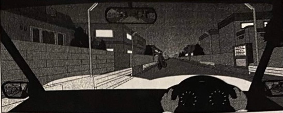
I think the bicycle will notice my vehicle approaching, so I will continue to overtake.
Since the cyclist may be intoxicated, I will pull to the right side of the road first, confirm the bicycle does not veer into the middle, and then overtake.
The bicycle is wobbling and may fall, so I will speed up early to overtake.
Question 95. You are driving at 40 km/h with an obstacle on a curve. What should you pay attention to while driving?
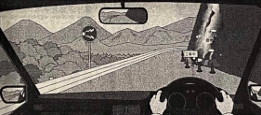
The curve ahead has limited visibility, and it is impossible to know when an oncoming vehicle may appear, so I will sound the horn when approaching the curve to signal my presence and then drive cautiously.
An oncoming vehicle on the other side of the curve may appear in my lane, so I will pull to the left as much as possible and drive cautiously.
The curve is not wide enough to pass an oncoming vehicle, so I will pass through the curve before an oncoming vehicle arrives.